
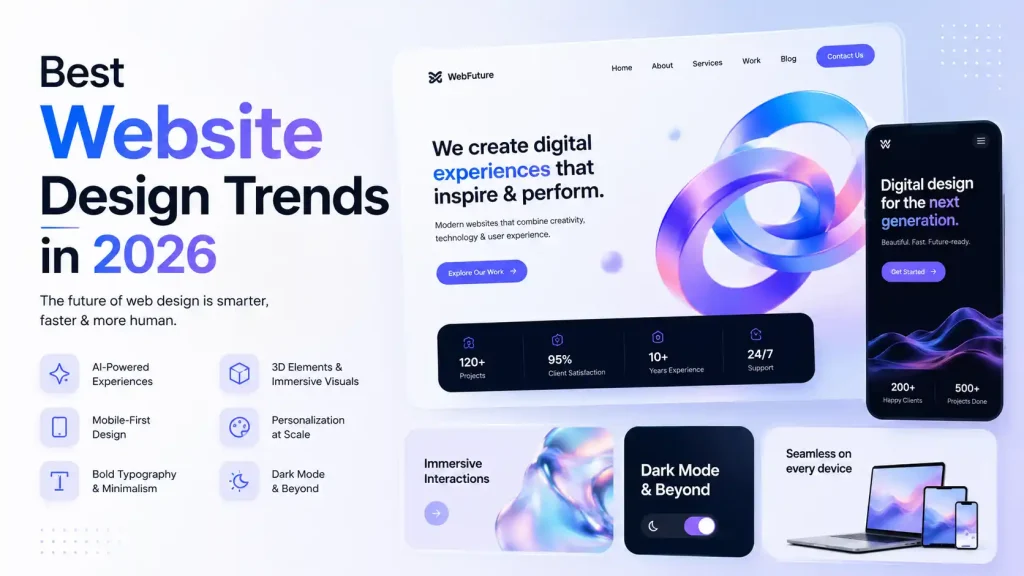
Best Website Design Trends in 2026 (The Ultimate UI/UX Guide)
Introduction
The digital landscape is undergoing a massive transformation. If you look at the evolution of digital interfaces over the past decade, we have moved from cluttered, text-heavy pages to minimalist flat designs, and now, we are entering an era of hyper-personalization, spatial depth, and intelligent interfaces. In 2026, the best website design trends are no longer just about making things look “pretty.” They are about how a website feels, how it reacts, and how it solves the user’s problems in real time.
Today, user attention spans are shorter than ever, yet their expectations for digital experiences have never been higher. A generic, template-based website is no longer enough to build trust, generate high-quality leads, or drive e-commerce sales. Modern consumers expect websites that load in milliseconds, adapt to their specific needs, and provide an immersive, cinematic experience without sacrificing usability.
Whether you are a digital agency owner looking to upgrade your client portfolios, a marketing manager planning a corporate rebrand, or a business owner wanting to stay ahead of the competition, understanding these shifts is critical.
In this comprehensive, deep-dive guide, we will explore the best website design trends in 2026 that are shaping the future of the internet. From the integration of advanced Artificial Intelligence (AI) to the resurgence of tactile maximalism and organic anti-grids, this is your blueprint for building high-performing digital real estate this year.
1. Generative UI and AI-Powered Hyper-Personalization
Artificial Intelligence is no longer just a backend tool for writing code or generating stock images; in 2026, it has become a fundamental co-designer. The biggest leap in UI/UX this year is the shift toward Generative User Interfaces (GenUI).
What is Generative UI?
Instead of forcing every single visitor through the exact same static layout, Generative UI uses AI to adapt the website’s structure, content, and complexity in real-time based on user behavior and intent.
For Beginners: If the system detects a first-time user, it might simplify the navigation menu, highlight a “Start Here” button, and enlarge the font for better readability.
For Power Users: If the user is a returning customer, the interface dynamically reorganizes itself to show advanced analytics, recent purchases, or quick-action shortcuts.
This trend is moving us from “responsive design” (which adapts to the screen size) to “adaptive design” (which adapts to the human being). It drastically reduces bounce rates because the website essentially molds itself to give the user exactly what they want, precisely when they want it.
2. The Rise of the Bento Grid Layout
If there is one layout trend that has absolutely dominated 2026, it is the Bento Grid. Named after the traditional Japanese lunchbox, this design philosophy involves breaking down website content into distinct, asymmetrical, card-like compartments.
Why Bento Grids Work So Well:
Information Hierarchy: In an age of information overload, Bento grids allow designers to present highly dense information (statistics, brief videos, features, and testimonials) in a scannable, digestible format.
Mobile-First Perfection: These modular blocks naturally stack on top of one another on smaller screens, making mobile responsiveness incredibly smooth and intuitive.
Visual Order: Even if you use a mix of vibrant colors, complex charts, and typography inside the boxes, the strict grid lines maintain a sense of pristine organization and digital cleanliness.
Expect to see Bento grids heavily utilized in SaaS dashboards, agency portfolios, and modern e-commerce product pages throughout 2026.
3. Kinetic Typography: Words That Move and Breathe
For years, typography was treated as a static element—a vessel purely for delivering information. In 2026, words are becoming part of the interface’s motion design. Kinetic typography is the art of moving type, and it has evolved from basic fade-ins to highly sophisticated, scroll-triggered animations.
How it is Being Used:
Scroll-Linked Reactions: As the user scrolls down the page, massive hero headlines might stretch, compress, or shift in weight (utilizing modern Variable Fonts).
Cursor Interactions: Letters that scatter when the mouse hovers over them, or text that acts like a magnetic liquid, following the user’s cursor.
Replacing Hero Images: Many modern websites are ditching the traditional hero background image entirely, opting instead for bold, animated typography on a stark, contrasting background to make an immediate, punchy statement.
When implemented correctly using lightweight animation libraries (like GSAP), kinetic typography adds immense energy and personality to a brand without bogging down page load speeds.
4. Organic Shapes, Anti-Grids, and Fluidity
While the Bento grid satisfies our need for order, another major trend is pushing in the exact opposite direction: The Anti-Grid.
After nearly a decade of sharp edges, strict columns, and highly constrained modular designs, designers are bringing warmth, nature, and humanity back to the web.
Key Characteristics of Anti-Grid Design:
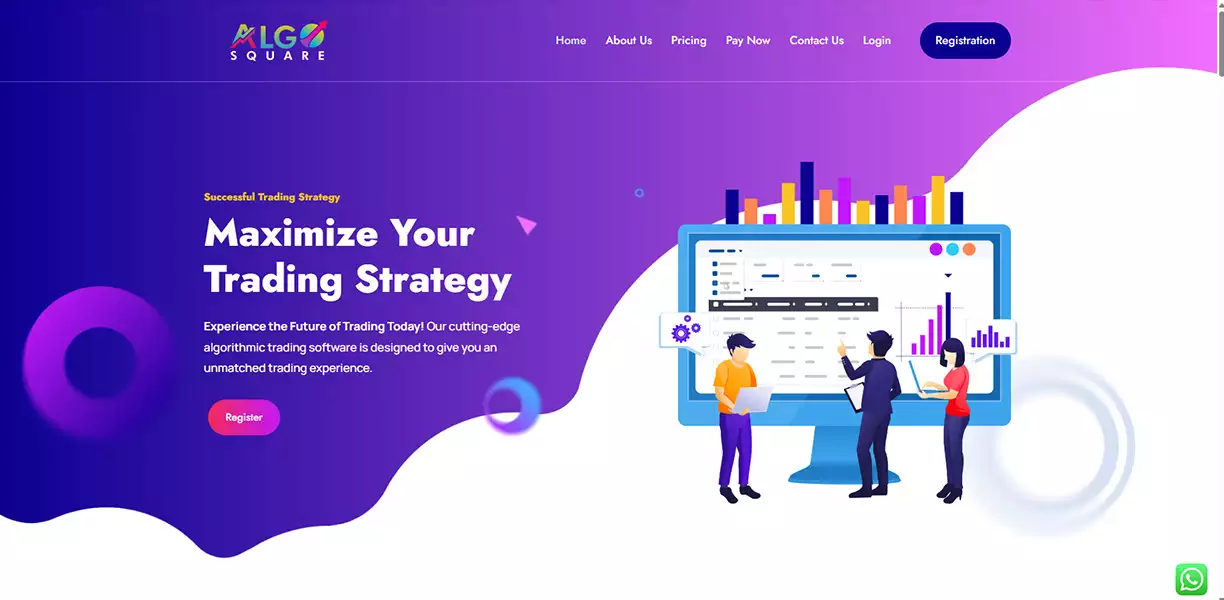
Biomorphic Shapes: Replacing perfect squares and circles with asymmetrical, flowing, fluid blobs that mimic nature (water droplets, leaves, clouds).
Layered Overlaps: Elements that intentionally bleed into one another, breaking out of traditional containers to create a sense of depth and unconstrained creativity.
Soft Gradients: Combining these organic shapes with multi-layered, smooth gradients that slowly shift colors in the background, creating a soothing, almost hypnotic effect.
This trend is particularly popular for lifestyle brands, creative agencies, and health/wellness sectors, as it evokes feelings of comfort, approachability, and digital calmness.
5. Tactile Maximalism and Modern Brutalism
The web has seen so much “clean, corporate minimalism” over the last few years that everything started to look exactly the same. In response, 2026 is seeing a massive resurgence of Tactile Maximalism and a refined version of Web Brutalism.
This trend is about being loud, unapologetic, and highly expressive.
Visible Grids and Raw Elements: Exposing the wireframes, using heavy, harsh typography, and embracing raw textures like grain, noise, or digitized static.
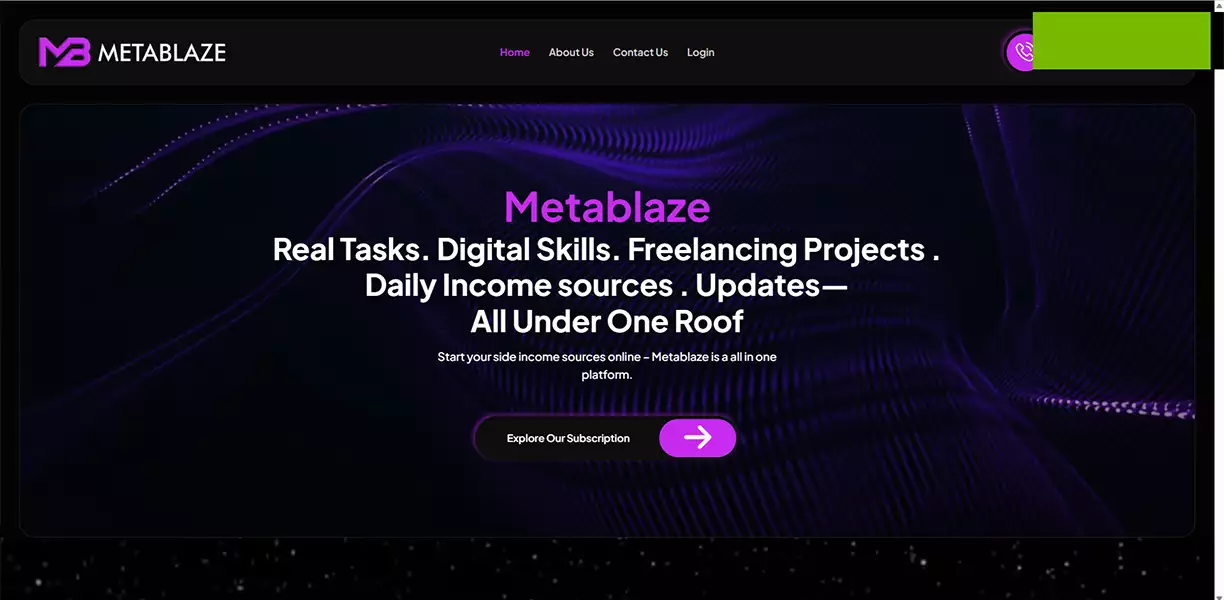
Clashing Dopamine Colors: Moving away from safe muted tones and utilizing highly saturated, vibrating neon colors (like hyper-purples, electric greens, and cyber-yellows) that grab the user by the collar.
Sensory Overload (with purpose): Stacking 3D elements, marquee scrolling text, and bold borders.
While not suitable for a traditional corporate law firm, tactile maximalism is the go-to aesthetic for fashion brands, streetwear, web3 projects, and creative studios that want to project supreme confidence and artistic edge.
6. Lightweight Responsive 3D and Spatial UX
In the past, embedding 3D graphics on a website meant forcing the user to endure a 10-second loading screen while their computer’s fan went into overdrive. Thanks to advancements in WebGL and lightweight 3D libraries (like Spline and React Three Fiber), Responsive 3D is now mainstream in 2026.
The Spatial Web Experience:
Interactive Products: Instead of a flat photo carousel, e-commerce sites allow users to spin, zoom, and dissect a 3D model of a product directly in the browser.
Immersive Storytelling: Backgrounds that tilt and shift perspective as you move your phone or move your mouse, creating a parallax effect that feels like looking through a window rather than staring at a flat screen.
With the rise of mixed reality headsets, designing for spatial depth (X, Y, and Z axes) is training users to expect digital environments that they can step into, rather than just scroll past.
7. Glassmorphism 2.0: Depth and Transparency
Glassmorphism—the design style that mimics frosted glass—is not entirely new, but its 2026 iteration is more refined and purposeful.
Instead of slapping a blur effect on everything, designers are using subtle transparency to establish visual hierarchy and create a “layered” tactile feel. By placing frosted glass cards over vibrant, moving gradient backgrounds, the interface feels deeply modern, clean, and premium. It helps separate the foreground text from complex background imagery without making the design feel heavy or claustrophobic.
8. Micro-Delights and Functional Animation
Animation in web design has matured. We are no longer animating things just to prove we can. In 2026, the focus is on Micro-Delights—small, functional animations that provide instant neurological feedback to the user.
A submit button that physically compresses when clicked and turns into a satisfying checkmark.
A toggle switch that has a subtle, bouncy, tactile feel to it.
Form fields that gently shake if an incorrect email is entered, rather than just showing a harsh red error text.
These micro-interactions serve a crucial psychological purpose: they reassure the user that the system is listening, working, and responding to their inputs. It makes a digital interface feel alive and empathetic.
9. Voice, Gesture, and Multi-Modal Interfaces
We are gradually moving toward a “Zero UI” future. While screens are not disappearing anytime soon, the way we interact with them is expanding.
In 2026, web design must account for Multi-Modal Interfaces. This means designing experiences that flow seamlessly whether the user is tapping a screen, using a mouse, speaking a voice command, or using hand gestures via a webcam. Websites are integrating conversational AI chatbots that don’t just act as FAQs, but can actually navigate the site for you, add items to your cart, or switch the site to dark mode just by you speaking to it.
10. Sustainable and Green Web Design
As the carbon footprint of the internet becomes a major global conversation, Sustainable UX has evolved from an ethical choice into a strict business trend.
Heavy, bloated websites require more server power to load, which consumes more electricity. In 2026, “Green Design” aligns perfectly with technical SEO.
Cleaner Code: Stripping out unnecessary plugins and utilizing modern CSS/JS frameworks.
Optimized Media: Using WebP and AVIF image formats, and avoiding autoplaying heavy background videos unless absolutely necessary.
Dark Mode Defaults: Not only does dark mode reduce eye strain, but on OLED screens, it significantly reduces the power consumption of the user’s device.
A sustainable website is a blazing-fast website. And a blazing-fast website ranks higher on Google and converts more customers.
Conclusion: Designing for the Future
The best website design trends in 2026 all point toward one ultimate goal: creating digital experiences that are deeply human, intuitively smart, and visually captivating. Whether you lean into the organized logic of Bento grids, the expressive chaos of modern brutalism, or the cutting-edge capabilities of AI-driven generative UI, the core rule remains the same—your design must solve a problem.
A beautiful website that takes 8 seconds to load is a failure. A fast website with a confusing user journey is a failure. The agencies and brands that will dominate 2026 are those that successfully merge breathtaking aesthetics with flawless performance, robust SEO, and an empathetic understanding of their users.
Are you ready to bring your digital presence into 2026? The future of the web is interactive, adaptive, and immersive. It is time to stop building mere web pages, and start building digital experiences.
Ready to Upgrade Your Website for 2026?
At Onetech Solution, we specialize in crafting modern, high-converting digital experiences that align with the latest UI/UX trends. Our expert team will help you stand out from the competition by:
✅ Designing custom, user-friendly layouts (Bento Grids & Generative UI)
✅ Implementing fast-loading, mobile-responsive designs
✅ Upgrading your website with seamless WhatsApp API automation
✅ Ensuring your website loads in under 2 seconds
✅ Boosting your overall SEO rankings and lead conversions
Get a Free Website UI/UX Consultation Today!
📞 Call us: +91 966-988-5053 | +91 8770-70-3080 📧 Email: info@onetechsolution.in 🌐 Visit: https://onetechsolution.in
Located in Indore: EE42, Super City, Near Gyanshila Square, Dhhabli, Indore (M.P.)
Don’t let an outdated website hold your business back. Contact Onetech Solution today and turn your website into a modern, high-performance conversion machine!